
As we recognize OCD Awareness Week, I’m honored to share Part Two of my personal journey with OCD. What began as a childhood filled with fear and uncertainty eventually became a path toward healing, purpose, and helping others. My hope in sharing my story is to remind those struggling that they are not alone, and that there is life beyond fear.
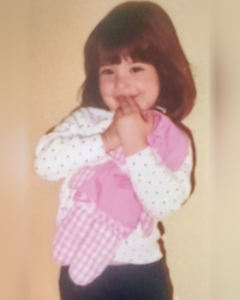
In the first part of this series, I shared something I have kept mostly private throughout my career: long before I became a therapist specializing in OCD, I was a child living with it.
I’ve spent 15 years listening to people courageously tell me what OCD has whispered, shouted, threatened, and demanded of them.
Now I want to tell you what it once said to me.
And to do that, I have to introduce you to a little girl.
The Little Girl
Imagine a little girl huddled in the darkness outside her parents’ bedroom door.
She is crying.
She is terrified.
She wants nothing more than to crawl into the safety of her parents’ room and somehow know that everything is going to be okay.
But she can’t know that. Her mind won’t let her.
What if the sun doesn’t come up tomorrow? What if your parents die in an accident? What if something terrible happens? What if you aren’t safe?
The questions come one after another.
She doesn’t understand why her mind works this way. She doesn’t know that there is a name for what she is experiencing. She certainly doesn’t know that millions of other people have minds that ask frightening questions just like hers.
She only knows that she is scared.
And different.
And very much alone.
That little girl was me.
Before I Knew It Was OCD
I didn’t know that I had OCD. My parents didn’t know.
When I look back now as a therapist, I can recognize things that none of us had words for then.
There was the fear. There was the perfectionism. There was the need for things to feel “just right.” There was the heightened sense of responsibility. There was magical thinking. There was reassurance seeking. There were mental rituals no one else could possibly see.
There were sensory experiences that could make clothing feel almost intolerable against my body. And there was an exhausting need to somehow control the uncontrollable.
But at the time, there was no diagnostic language running through my childhood mind.
There was simply: Something is wrong with me.
I remember spending countless hours in my bedroom organizing.
Books needed to be perfectly aligned and arranged according to height. Clothes had to be organized and reorganized. Nothing could be on the carpet except the furniture.
Things needed to look right.
But more importantly, they needed to feel right.
If I made a mistake, I might have to start again. If someone interrupted me, I might have to start again.
My family didn’t understand why an interruption could provoke such an enormous reaction from me. Neither did I.
I didn’t want to be angry. I wasn’t trying to be difficult.
I was desperate.
Because once OCD tells you something must be done a certain way, an interruption doesn’t feel like a minor inconvenience. It can feel unbearable.
The Child Everyone Thought Was Doing So Well
There was another complication.
Some of the very behaviors causing me distress looked wonderful from the outside.
I was organized. Responsible. Meticulous. My homework was done. My room was immaculate. I cared deeply about doing things correctly.
Adults praised me for many of the things that were quietly becoming compulsive.
And why wouldn’t they?
No one could see the difference between the little girl who wanted to do something perfectly and the little girl who felt that she had to.
That distinction would become incredibly important to me years later as a therapist.
Behavior alone doesn’t always tell us what’s happening.
Sometimes we have to ask what is driving it.
What happens inside you if you don’t do it?
I wish someone had known to ask me that question.
Because my answer would have been very different from what my outward behavior suggested.
My World Was Becoming Smaller
OCD wasn’t satisfied with my bedroom. It rarely is.
Its rules expanded.
Soon it wasn’t enough for my belongings to be organized. I became aware of things throughout our house that didn’t feel right.
The dishes. The cupboards. The mail sitting on the counter. Other people’s belongings. Even my little sister’s room.
OCD began making demands not only of me, but indirectly of the people around me.
And there were other responsibilities.
Somehow, I became convinced that my presence helped keep my family safe.
Sleepovers were particularly difficult. Other children might have worried about missing home. I worried about what might happen to my family because I wasn’t home.
What if something happened while I was gone? What if my being there – or something I did while I was there – was somehow preventing it?
Looking back, I can see the magical thinking and inflated responsibility so clearly.
But a child doesn’t say, “I’m experiencing an obsession accompanied by an inflated sense of responsibility.”
A child thinks: I have to stay home because my family might not be safe without me.
And when you believe the stakes are the lives of the people you love, missing a sleepover doesn’t seem like much of a sacrifice.
So I stayed.
OCD had begun negotiating the boundaries of my life. And little by little, I surrendered territory.
Then Came Adolescence
As I grew, my OCD grew with me.
The rituals that once provided some temporary relief weren’t enough anymore.
School became another place where perfection was demanded.
A number couldn’t simply be correct. It had to look right. A letter couldn’t merely communicate a word. It had to be formed correctly.
Homework could be almost finished, but if something didn’t feel right, I could start over.
Reading wasn’t simply reading. I needed to know I had fully understood every word. If I became distracted or interrupted, I might return to the beginning of the paragraph, page, or chapter.
I checked. I rechecked. I questioned.
Did I really wash my hair? Did I lock the door? Did I read everything?
Did I say something wrong? Is someone upset with me? Did I do it correctly?
Am I sure?
That last question may be one of OCD’s most powerful: Are you sure?
I desperately wanted to be.
So I did what people with OCD so often do when they don’t yet understand the trap. I tried harder to become certain.
I washed again. I checked again. I counted. I reviewed. I repeated. I sought reassurance.
And occasionally I would get what I wanted: a momentary feeling of relief.
Then the doubt returned. It always returned.
Living a Life No One Could See
One of the hardest things for me to explain about those years is how much of my suffering was invisible.
People saw a daughter. A sister. A student. A perfectionist. Maybe sometimes they saw a difficult or irritable child.
They couldn’t see the constant activity inside my mind.
And I became very good at hiding it.
Part of me knew that what I was doing didn’t make sense to other people. I was embarrassed. I didn’t want anyone preventing me from performing the rituals I believed I needed.
And perhaps most painfully, I didn’t understand it myself.
So I carried it quietly.
As adolescence progressed, the cost became harder to hide.
There was less room for friends. Less room for spontaneity. Less room for fun.
Less room for me.
My world became smaller and smaller as OCD required more and more.
Eventually, I became exhausted. Then depressed. And ultimately, hopeless.
There is a sentence from the story I wrote many years ago that is difficult for me to read even today:
“My bed became my safe haven. I didn’t want to see anyone, I didn’t want to be seen.”
That girl had spent years fighting something she didn’t even know had a name.
She wasn’t weak. She was exhausted.
What I Know About Her Now
This is one of the strangest parts of telling my story after becoming a therapist.
I can look backward with knowledge that little girl never had.
I understand OCD now.
I understand the cycle. I understand why reassurance helped for a moment and ultimately made things worse. I understand why every attempt to achieve absolute certainty simply created another question.
I understand why the rituals expanded. I understand why my family didn’t recognize what was happening.
And I understand something else that I wish I could tell that little girl:
You are not your OCD.
When I work with children today, there are moments when I see pieces of myself sitting across from me.
Sometimes I see the frightened child. Sometimes the perfectionist. Sometimes the child constantly asking a parent for reassurance.
Sometimes I see parents who are exhausted, confused, frustrated and desperately trying to help their child.
And my heart aches for all of them.
Because I understand both sides in a way I couldn’t have imagined when I was young.
My parents weren’t failing me. They didn’t know. Neither did I.
We were a family trying to solve a problem we couldn’t yet identify.
Today we know so much more. And that matters enormously to me.
When a child comes into our care, I sometimes think about the years that might be returned to them because someone recognized what was happening earlier.
The sleepovers they might attend. The friendships they might enjoy.
The mornings that don’t have to be consumed by rituals. The family dinners that don’t have to become battles.
The childhood they don’t have to surrender to OCD.
Perhaps that is one reason treating OCD has never felt like simply a profession to me.
I know what can be taken.
The Article That Changed Everything
By the time I was 16, I was running out of strength.
And then something happened that seems almost impossibly small considering how dramatically it would change the course of my life.
I found an article in a teen magazine.
It was about a girl with something called Obsessive-Compulsive Disorder.
I had never heard those words used to explain what was happening to me.
I read about this girl.
And I recognized myself.
For the first time, the strange things I had been experiencing weren’t simply evidence that there was something fundamentally wrong with me.
They had a name.
There were other people like me.
Maybe there were even answers.
I remember sitting my parents down at our kitchen table with that article in my hand.
After years of hiding, I began telling them the truth.
About the rituals. The thoughts. The fear. The things they had never seen.
I imagine it must have been overwhelming for them. Their daughter was suddenly describing years of suffering they hadn’t known existed.
At first, they struggled to believe it.
And then someone spoke up.
My little sister, Sarah.
Five years younger than me. The little sister whose room I had tried to control. The little sister who had sometimes been on the receiving end of my frustration. The little sister I assumed hadn’t understood any of it.
She had seen me.
She told my parents that what I was saying was true. She had witnessed the things I had worked so hard to hide.
And in that moment, something changed.
My family finally knew.
The secret was out.
I wasn’t alone anymore.
We still had a long way to go. In fact, some of the hardest parts of my story hadn’t even happened yet.
But for the first time, the little girl who had spent so many nights frightened and alone finally had something she had desperately needed.
A name for what was happening to her.
And with that name came the first glimmer of something I hadn’t felt in a very long time.
Hope.
This is Part Two of Laura’s story. Stay tuned for future installments as she continues to share her journey.
•Laura Yocum, MFT, PPS, is Executive Director, clinical supervisor, and psychotherapist at the OCD Center of Los Angeles, a private, outpatient clinic specializing in Cognitive-Behavioral Therapy (CBT) for the treatment of Obsessive-Compulsive Disorder (OCD) and related anxiety based conditions. In addition to individual therapy, the center offers nine weekly therapy groups, as well as online therapy, telephone therapy, and intensive outpatient treatment. To contact the OCD Center of Los Angeles, click here.
10 Comments
Thank you for sharing your very relatable story. I’m looking forward to reading more.
Thank you so much for reading and for your kind words! It means so much to know that my story resonates with others. Sharing it has been both vulnerable and incredibly meaningful, and I’m so grateful for the connection it’s creating.
Thank you for this so much!! It resonated with me as I was that little girl who wanted to be in the safety of my parents bed, afraid if I didn’t move the shoes at night that my mom would trip & it would be my fault. Always needing to be with my mom to “protect” her or it was unbearable. Keep sharing! It helps so many 🙂
Thank you so much for sharing this with me. I can relate so deeply to that overwhelming sense of responsibility for keeping the people we love safe. It’s heartbreaking to think about how much fear and responsibility we carried as little girls, when all we really wanted was to feel safe ourselves. I wish we could go back and give those little girls the comfort and understanding they so desperately needed. Your words mean so much to me, and knowing that my story is helping others feel less alone makes sharing it all worthwhile.
Thank you for sharing your story Laura. The moment we realize that we’re not the only ones going through it is so important.
Thank you so much! I couldn’t agree more. There is something incredibly powerful and healing about realizing we’re not alone in our experiences. For so many years, I felt like I was the only one, and I hope that by sharing my story, others might feel a little less alone in theirs.
I have OCD. I am 60 now and remember the obsessive thoughts and compulsive behaviors starting when I was 5, and not understanding them. Certainly my parents didn’t understand some of my behavior. I was that little girl too. Yet like you the OCD partly served me well – I was a perfectionist and a straight A student. That became my identity. While I have made excellent progress over the years (I currently have an fantastic therapist who specializes in OCD and anxiety), I still experience OCD flareups. And I still grieve over what I lost because OCD and anxiety controlled me for so many years. I just really want to thank you for sharing your journey. I write for a living, and this article is powerful not only because of its content, but because it is so well-written.
Thank you so much for these incredibly kind and thoughtful words. They truly mean so much to me, especially coming from someone who writes for a living! I relate so deeply to what you shared about perfectionism becoming part of your identity, and also to the grief that comes with recognizing how much OCD took from us over the years. I think there’s something so powerful about looking back at those little girls with the compassion and understanding we couldn’t give ourselves at the time. I’m so glad you’ve found a wonderful therapist and have made such meaningful progress. Thank you for sharing a piece of your story with me. It’s connections like these that remind me why I finally decided to share mine.
Thank you so much. I can’t tell you how much all of this resonates with me.
It was impossible to tell anyone what I was feeling and going through, and yet it all seemed so important, so all-encompassing.
“She wants nothing more than to crawl into the safety of her parents’ room and somehow know that everything is going to be okay. But she can’t know that. Her mind won’t let her. What if the sun doesn’t come up tomorrow? What if your parents die in an accident? What if something terrible happens? What if you aren’t safe?”
Years. For years I went through these exact fears every single day. As an adult, I can’t even imagine ever going through that again. I just have to marvel at how tough that little kid had to be in order to make it through those days.
Thank you so much for sharing this with me. Your words really touched me. It’s hard to put into words just how terrifying and lonely those years were, especially when we were too young to understand what was happening in our own minds, let alone explain it to anyone else. I think about that little girl often, and you’re so right about how strong those little versions of ourselves had to be just to get through each day. I wish we could go back and give them the comfort and understanding they so desperately needed. I’m so grateful that sharing my story has connected me with others who truly understand.